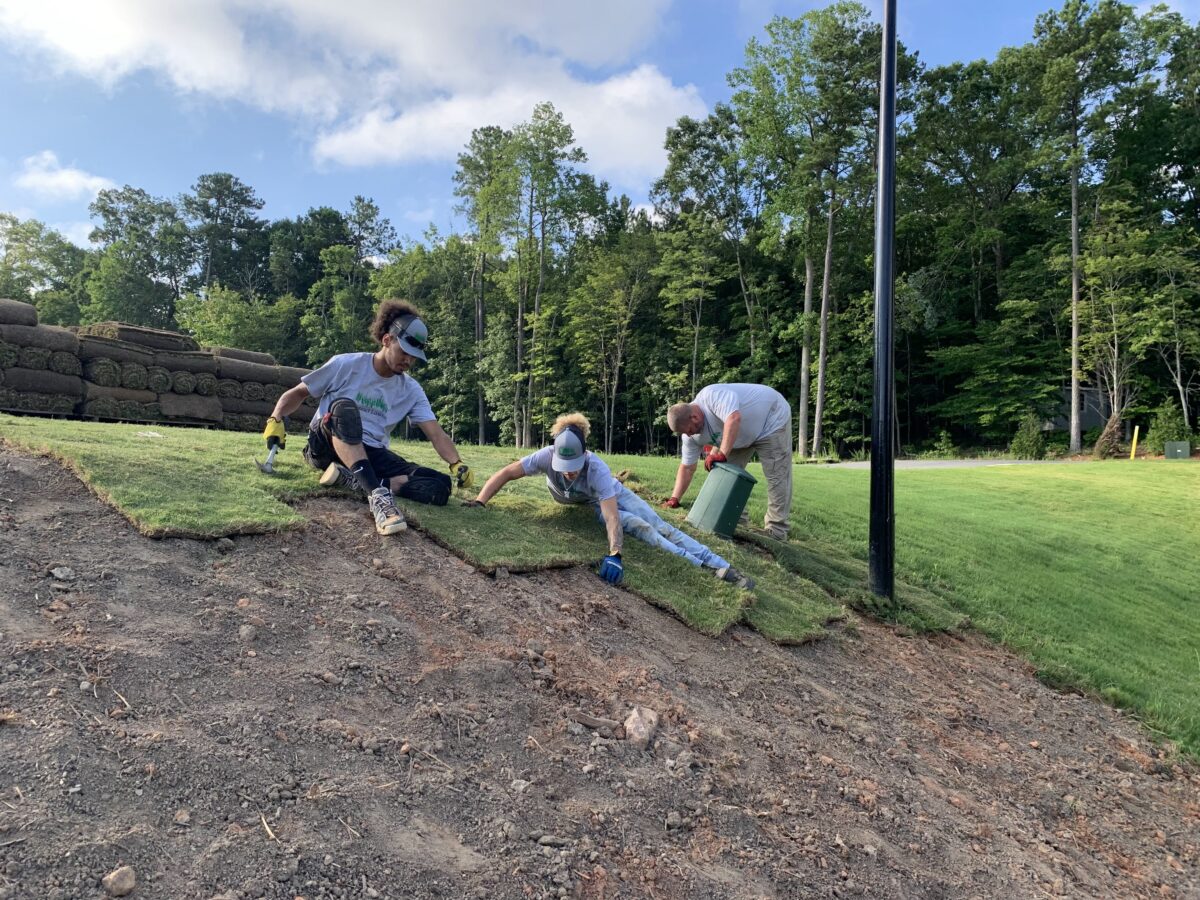
Fresh sod can transform a Southwest Florida yard in a single day, but the installation is only the first step. The first few weeks after delivery are when the new lawn either starts rooting into the soil or begins to dry out, shrink, and separate at the seams. In Fort Myers, Cape Coral, Naples, Port Charlotte, Sarasota, Bradenton, and nearby communities, heat, sandy soil, afternoon storms, and irrigation restrictions can all affect how quickly fresh sod establishes.
The goal is not to flood the yard. The goal is to keep the sod and the soil beneath it consistently moist long enough for roots to tack down, then gradually train the lawn toward deeper, less frequent watering. That balance is especially important with Florida grass types such as St. Augustine, Bahia, Zoysia, and Paspalum, because each lawn responds differently depending on sun exposure, soil preparation, drainage, and traffic.
Below is a practical watering guide for homeowners planning sod installation or trying to protect a newly replaced lawn.
Why watering matters so much during the first few weeks
Sod arrives as living grass with a shallow layer of soil and roots. Once it is installed, those roots need moisture at the seam between the sod and the prepared yard soil. If that layer dries out, the sod can yellow, curl at the edges, or fail to root evenly. If it stays saturated for too long, the yard can become soft, muddy, and more prone to disease or rutting.
Southwest Florida adds a few complications:
- Sandy soils can dry quickly after a hot, windy afternoon.
- Heavy summer rain can soak one part of the yard while another area under eaves or palms stays dry.
- Pool cages, lanais, oaks, palms, and fences can create shade patterns that change watering needs.
- Sprinkler heads may not overlap correctly after construction, grading, or landscape changes.
- Afternoon storms may make the lawn look wet even when the root zone is still inconsistent.
That is why Sunshine Sod recommends thinking about irrigation before the pallets arrive, not after the grass is already on the ground.
A simple new sod watering schedule
Every yard is different, but most Southwest Florida homeowners can use this as a starting point after fresh sod installation.
Days 1–7: keep the sod consistently moist
During the first week, the sod should not be allowed to dry out. Short, frequent watering cycles are usually better than one long run that creates runoff. UF/IFAS guidance for newly planted St. Augustinegrass notes that multiple short irrigations during the first 7–10 days help prevent the grass from drying out while it establishes.
For a typical residential lawn, that may mean watering more than once per day during hot weather. The exact runtime depends on sprinkler output, sun exposure, slope, and soil. The practical test is simple: lift a corner of the sod in a discreet spot. The underside should feel moist, and the soil below should be damp but not soupy.
If the sod feels hot, crispy, or dry at the edges, it needs attention. If water is running down the driveway or collecting in low spots, the irrigation schedule needs adjustment.
Days 8–14: begin reducing frequency
During the second week, the sod should begin grabbing into the soil. You can usually start reducing frequency while still applying enough water to moisten the root zone. UF/IFAS guidance commonly points to a transition from frequent light irrigation to daily watering that applies roughly a quarter to a half inch, depending on conditions.
This is also the week when uneven coverage becomes obvious. Watch for:
- Brown corners near sidewalks or driveways
- Dry strips between sprinkler heads
- Extra-wet areas near broken heads
- Sod edges that lift or shrink
- Shaded areas that stay soft while sunny areas dry out
Catching these problems early is much cheaper than replacing sections later.
Weeks 3–4: move toward deeper, less frequent watering
By the third and fourth week, the sod should be rooting more firmly. If you gently tug on the grass and it resists lifting, the roots are starting to establish. At this stage, watering can usually move toward two or three deeper sessions per week, adjusted for rainfall and local watering rules.
Do not keep running a first-week watering schedule forever. Overwatering can create shallow roots, soft soil, fungus pressure, and thatch problems. A healthy Florida lawn should gradually move toward watering when needed rather than constant daily irrigation.
Check the sprinkler system before sod delivery
A new lawn exposes every weakness in an old irrigation system. Before sod installation, turn on each zone and walk the property. Look for broken heads, blocked spray patterns, heads pointing into the street, low pressure, or areas that do not overlap.
Pay special attention to tight Florida yard layouts: side yards, pool-cage edges, mailbox strips, driveway corners, and small sections near patios. These are common places for new sod to dry out because the sprinkler system was designed for a different landscape layout or has shifted over time.
If your yard was recently graded, had a pool installed, had trees removed, or went through new construction, do not assume the old irrigation layout still works. Fresh sod needs consistent coverage across the whole installation area.
Rainy season does not eliminate the need to water
Many homeowners assume summer rain will handle the first few weeks after sod installation. Sometimes it helps. Sometimes it creates a false sense of security.
A hard afternoon storm may drop a lot of water quickly, but runoff, slope, compacted soil, and roof overhangs can leave dry pockets. On the other hand, if the yard already has drainage problems, more water can make low areas too wet for healthy rooting.
The better approach is to adjust around actual conditions. If the lawn receives a soaking rain, you may be able to skip or shorten an irrigation cycle. If the rain misses your neighborhood or only wets the surface, the new sod may still need water. Checking the soil under the sod is more reliable than guessing from the weather app.
Watch the edges, seams, and high-heat areas
The first signs of water stress often appear at sod edges and seams. Pieces can shrink slightly when they dry, which opens gaps and makes the lawn look patchy. Areas beside concrete are also vulnerable because driveways, sidewalks, and curbs radiate heat.
For Southwest Florida homes, the highest-risk areas are often:
- Full-sun front yards facing afternoon heat
- Strips along driveways and sidewalks
- Sloped canal lots
- Sandy yards with little organic matter
- New construction lots with compacted or builder-grade soil
- Areas under roof overhangs where rain does not reach
If these areas are drying faster than the rest of the lawn, the answer may be better sprinkler coverage, hand watering, soil preparation, or grading—not simply running every zone longer.
When to mow and fertilize new sod
Homeowners are often eager to mow and fertilize as soon as the lawn looks green. Be patient. New sod should generally be allowed to root before the first mow. If the pieces still lift easily, wait. When it is time to mow, use sharp blades and avoid removing too much height at once.
Fertilizer should also be handled carefully. UF/IFAS guidance for new St. Augustinegrass notes that newly planted lawns should not be fertilized immediately; sod is often fertilized before harvest, and early fertilizer can increase nutrient runoff before roots are established. Local rules and grass type matter, so avoid guessing or over-applying.
When to call Sunshine Sod
If you are planning sod delivery or installation in Southwest Florida, the best time to solve watering issues is before installation day. Sunshine Sod can help homeowners think through grass selection, delivery timing, site preparation, and installation planning so the new lawn has a better chance to establish cleanly.
Call Sunshine Sod if:
- Your current lawn is dead, patchy, or full of weeds
- You are replacing grass after construction, pool work, or grading
- Your yard has dry spots, standing water, or uneven sprinkler coverage
- You need sod delivered to a tight residential property
- You want help choosing between St. Augustine, Bahia, Zoysia, Paspalum, or another Florida grass option
Fresh sod is an investment. A smart watering plan protects that investment during the most important weeks after installation.
Bottom line
For new sod in Southwest Florida, water management is not about one universal runtime. It is about keeping the sod moist during the first week, reducing frequency as roots establish, checking sprinkler coverage, and adjusting for heat, rain, soil, shade, and drainage. Get those basics right, and your new lawn has a much better start.
If you are ready to replace a lawn or schedule sod delivery, Sunshine Sod can help plan the installation around your property, grass type, and local conditions.
Related Sunshine Sod Resources
If you are still planning the project, these Sunshine Sod resources can help you connect watering to the bigger installation plan:
- Sod Installation in Florida for full-service prep, installation, and aftercare planning.
- Fresh Sod Delivery in Florida for timing pallets so new grass is installed before it dries out.
- Topsoil and Grading Services for yards where low spots or runoff make watering uneven.
- Sod Maintenance Tips for keeping a new Florida lawn healthy after the first watering window.
- Contact Sunshine Sod if you need help planning delivery, installation, or follow-up care.