

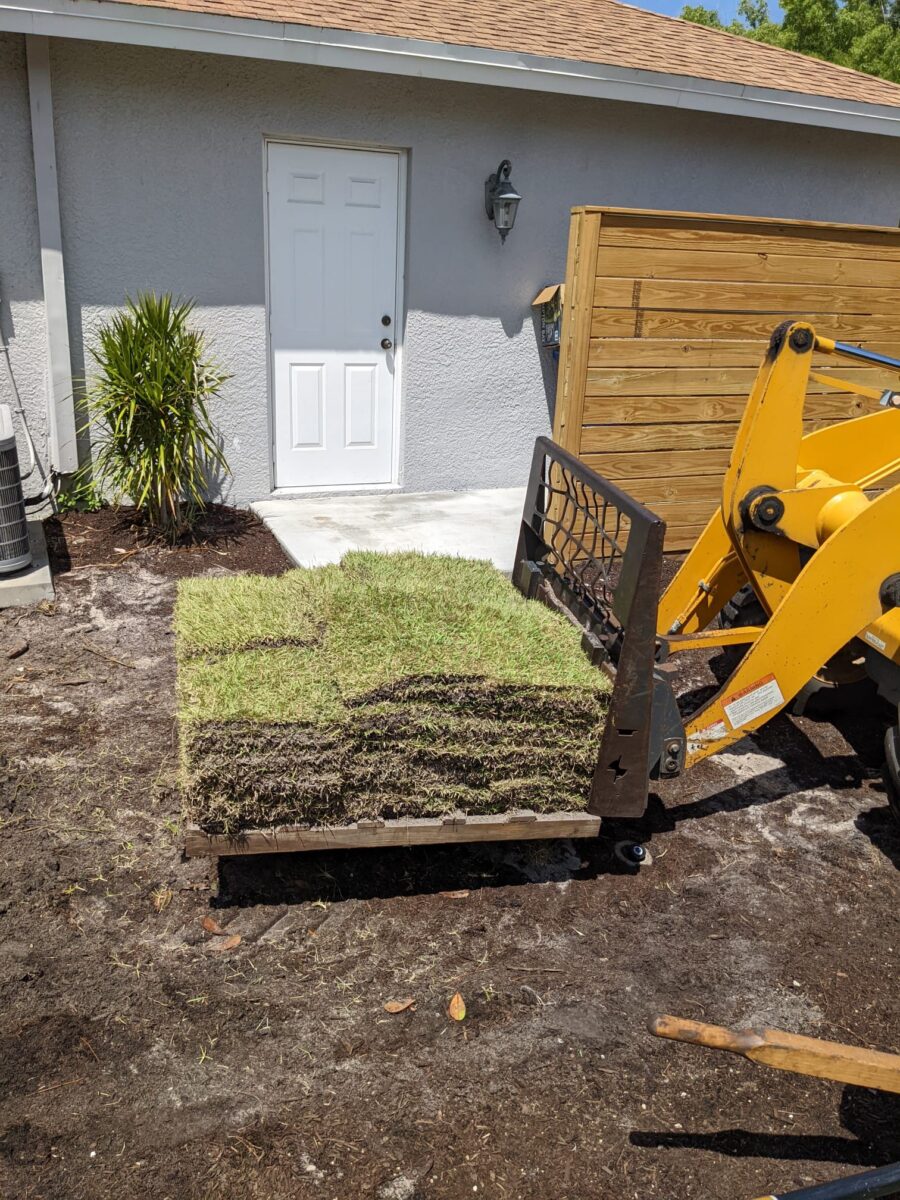
How to Prep Sandy Soil for Sod in Southwest Florida Sun
Sandy soil is common in Southwest Florida, and while it offers excellent drainage, it also presents unique challenges when installing sod. Water and nutrients pass through quickly, which can stress young roots if not appropriately managed. Here’s how to prepare sandy soil so your sod has the best chance to establish and flourish.
Step 1: Clear the Area
Remove all debris, weeds, and old grass. If replacing an existing lawn, use a sod cutter or shovel to eliminate remnants down to the root level.
Step 2: Check for Compaction and Prepare the Soil
Construction traffic can compact soil and restrict roots. Assess compaction before choosing a preparation method. Where tillage is appropriate, UF/IFAS describes preparing soil to a depth of 6–8 inches. Very sandy soil may not benefit from tillage alone; suitable amendments incorporated during preparation can help improve its structure.
Step 3: Select Suitable Amendments
A soil test and the site's existing conditions should guide preparation. Fully composted, mature organic matter can improve sandy soil's water- and nutrient-holding capacity. Select the material and application rate for the site rather than assuming every lawn needs the same two-inch layer. Mix organic amendments into the upper soil instead of leaving a separate layer beneath the sod. UF/IFAS provides amendment rates and incorporation guidance in Preparing to Plant a Florida Lawn.
Step 4: Grade the Surface
Ensure the area is graded slightly away from buildings to prevent water pooling. Use a landscaping rake to smooth the surface and eliminate bumps or dips.
Step 5: Use Soil Testing to Plan Fertilization
Do not apply a nitrogen-containing starter fertilizer such as 10-10-10 before laying sod. Newly planted sod has a limited root system and may not take up the nutrients efficiently. UF/IFAS generally recommends waiting 30–60 days after sodding before fertilizing. Ask when the sod was last fertilized and use soil-test results, grass-specific guidance and applicable local fertilizer rules to plan later applications. If a soil test identifies a phosphorus deficiency, obtain a specific preplant recommendation rather than automatically applying a balanced fertilizer.
Step 6: Water the Soil Before Laying Sod
Lightly water the prepared soil so it’s moist—not soggy—just before installation. This helps the sod root quickly and prevents drying out.
Step 7: Lay the Sod Immediately
Install sod within 24 hours of delivery, staggering seams and pressing down to remove air pockets. Use a lawn roller to ensure solid soil contact.
Aftercare Tips for Sandy Soil Sod
- Keep newly laid sod and the upper soil moist, not saturated, while roots establish. Adjust short, frequent watering for rainfall, sprinkler output and current local watering rules; reduce frequency as rooting progresses.
- Do not assume sandy soil requires routine annual topdressing. Assess the lawn and soil before adding material.
- Plan fertilizer timing and amounts around establishment, soil-test results, the grass species and local rules—not a blanket instruction to fertilize more often.
With the right preparation, even the sandiest soil in Southwest Florida can support a thick, healthy sod lawn that adds beauty and value to your property. See UF/IFAS establishment and irrigation guidance.
Helpful Sunshine Sod Links
Sod DeliverySod InstallationResidential Sod InstallationCommercial Sod InstallationFlorida Topsoil & GradingContact Sunshine SodPlan a Better Florida Lawn
Use this resource for planning, then confirm sod variety, soil preparation, watering requirements, delivery timing, and installation details with Sunshine Sod before starting your project.
- Compare sod varieties
- Prepare the soil
- Review watering needs
- Request a project quote
Assess the Existing Lawn
Use the page guidance to identify current soil, grass, and site-preparation conditions.
Prepare Irrigation
Check coverage and watering readiness before scheduling fresh sod delivery or installation.
Plan Establishment
Allow for the early watering and care that helps new sod root into the prepared soil.