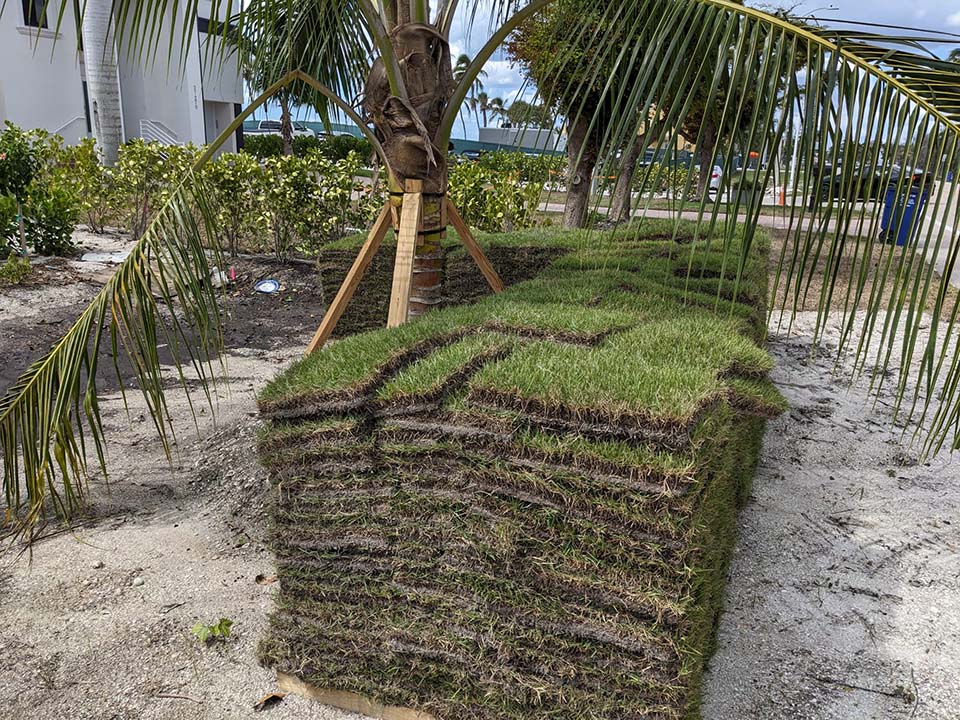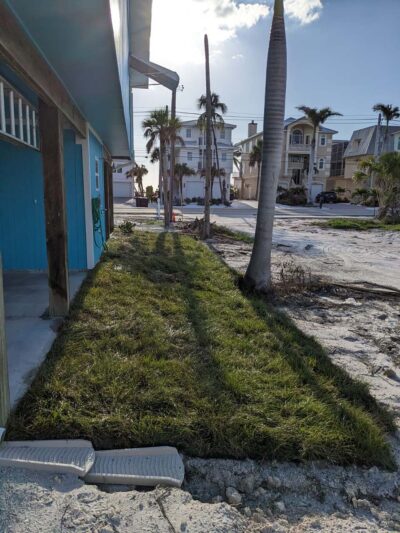

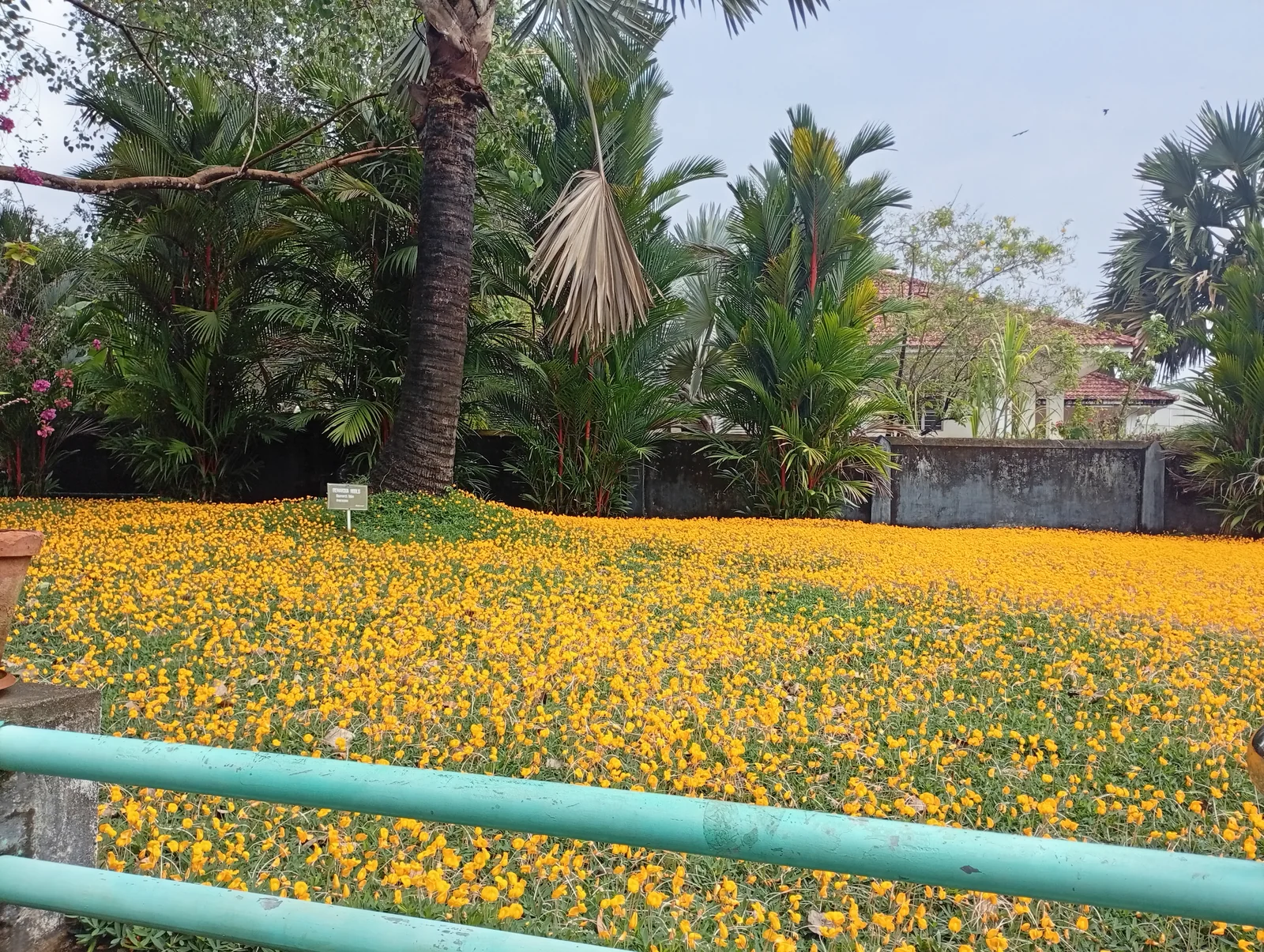
Called “peanut grass.” Actually a flowering legume.
If you’re searching for perennial peanut grass in Florida, you’re usually looking for an ornamental groundcover—not a true grass. Perennial peanut belongs to the legume family, alongside peas and beans. Its low canopy and warm-season yellow flowers give it a different look and purpose from a conventional lawn.
It can be a useful turf alternative in sunny, lightly used parts of a yard, or a companion to turf in separate landscape beds. It is not the annual peanut crop grown for edible nuts, and it is not a direct substitute for a hard-wearing play lawn. [1] [2]
Where perennial peanut makes sense
A good place to consider it
- Sunny ornamental beds and low-traffic lawn areas.
- Slopes or berms where an established rhizome mat can help hold soil.
- Landscape zones where you want seasonal flowers and less routine mowing.
- Spaces with paths or stepping stones that keep repeated footsteps off the planting.
Think twice before replacing turf
- Daily play areas, dog-running routes or frequently used shortcuts.
- Deep shade where you expect dense growth and abundant flowers.
- Poorly drained sites proposed for rhizomatous perennial peanut.
- Yards where a green appearance through freezing weather is essential.
The right answer may be a mixed landscape: keep suitable turfgrass where the yard gets used, and consider perennial peanut for ornamental areas. Check any applicable HOA landscape requirements before changing the planting. [1] [2] [3]
Know the type before you buy
“Perennial peanut” is a common name covering plants with different growth habits and water needs. Ask for the botanical name and cultivar rather than choosing by a yellow-flower photo alone.
Rhizomatous types: Arachis glabrata
These spread through underground stems called rhizomes. Established plants are drought tolerant and suit well-drained sites. Low-growing selections such as ‘Ecoturf’ and ‘Arblick’ are described by UF/IFAS; not every perennial peanut selection is a short ornamental type. Taller selections have long been grown for forage. [1] [2]
Stoloniferous types: Arachis pintoi
Pintoi peanut spreads by aboveground runners called stolons and can be propagated by seed or stolon cuttings. UF/IFAS distinguishes its moisture needs from rhizoma peanut: do not assume pintoi types have the same drought tolerance. Species identity matters when planning irrigation and site suitability. [2]
The examples above explain plant differences; they are not a list of Sunshine Sod’s available cultivars. Confirm the exact type and planting material with us before ordering.
What to expect in a Florida landscape
Sun and soil
For the perennial peanut we offer, plan on full sun with at least six hours of sunlight per day and well-drained soil. Full sun produces the best flowering; don’t treat perennial peanut as a solution for deep shade. Rhizomatous perennial peanut is suited to well-drained sandy soils; address drainage problems rather than assuming a drought-tolerant plant will also tolerate standing water. [1] [2]
Water: establishment is different from long-term care
New plantings need regular irrigation while establishing. Drought tolerance describes established rhizomatous perennial peanut, not newly planted material and not every species sold under the common name. Match irrigation to the plant type, rainfall, soil and local watering rules. There is no one-size-fits-all schedule for every Florida yard. [1] [2]
Establishment and weeds
Start with a well-prepared, weed-cleared planting area. Groundcover needs time to spread, and weeds can compete while gaps remain. UF/IFAS describes rhizomes, plugs and container-grown plants as general establishment methods. Sunshine Sod sells this product in sod rolls only. Ask how the specific material should be planted and cared for, and do not expect spaced plants to become a finished lawn overnight. [1] [3]
Mowing and feeding
Ornamental perennial peanut does not need to be mowed like a conventional lawn, although occasional mowing can tidy a planting and encourage flowering. Charlotte County Extension gives about four inches once a month as one landscape example—not a universal rule for every cultivar or site. As a legume, perennial peanut associates with nitrogen-fixing bacteria and generally does not need routine nitrogen fertilizer. Low fertilizer needs do not mean every soil has all the other nutrients it needs. Use soil testing and local Extension advice rather than automatically applying a lawn fertilizer program. [1] [2] [3]
Winter appearance and edges
In areas without frost, foliage can remain green, although growth slows. Frost can brown the foliage and trigger dormancy; regrowth follows suitable warmer conditions. Don’t assume year-round flowers or an evergreen carpet everywhere in Florida. Vigorous rhizomes can also spread outside the intended bed, so plan edging and ongoing boundary care. [1] [2]
Perennial peanut or a traditional sod lawn?
Start with how you use the space, not just the maintenance you hope to avoid.
| Your priority | Perennial peanut | Turfgrass sod |
|---|---|---|
| Landscape appearance | Leafy groundcover with seasonal yellow flowers. | A familiar grass lawn; appearance varies by grass and care. |
| Repeated activity | Best reserved for low-traffic areas; provide paths. | Choose a grass suited to expected wear, sunlight and recovery needs. |
| Maintenance | Potentially less mowing and nitrogen input; weeds, watering and edges still need attention. | Ongoing mowing, irrigation and species-specific care. |
| Getting established | Planting method affects initial coverage and fill-in; confirm the material first. | Sod provides initial surface coverage but still needs rooting, watering and protection. |
For the areas where grass fits better, explore our comparison of Florida sod varieties. St. Augustine, Zoysia, Bermuda and Bahia are not interchangeable; match the variety to the site rather than assuming any sod will solve shade, drainage or wear problems.
Compare the whole project cost, too: planting material, preparation, establishment care and ongoing maintenance. A lower-mowing landscape is not automatically the lowest-cost installation, and savings depend on the property. Request a project-specific quote rather than relying on a generic price per square foot.
Perennial peanut questions, answered
Does Sunshine Sod sell perennial peanut?
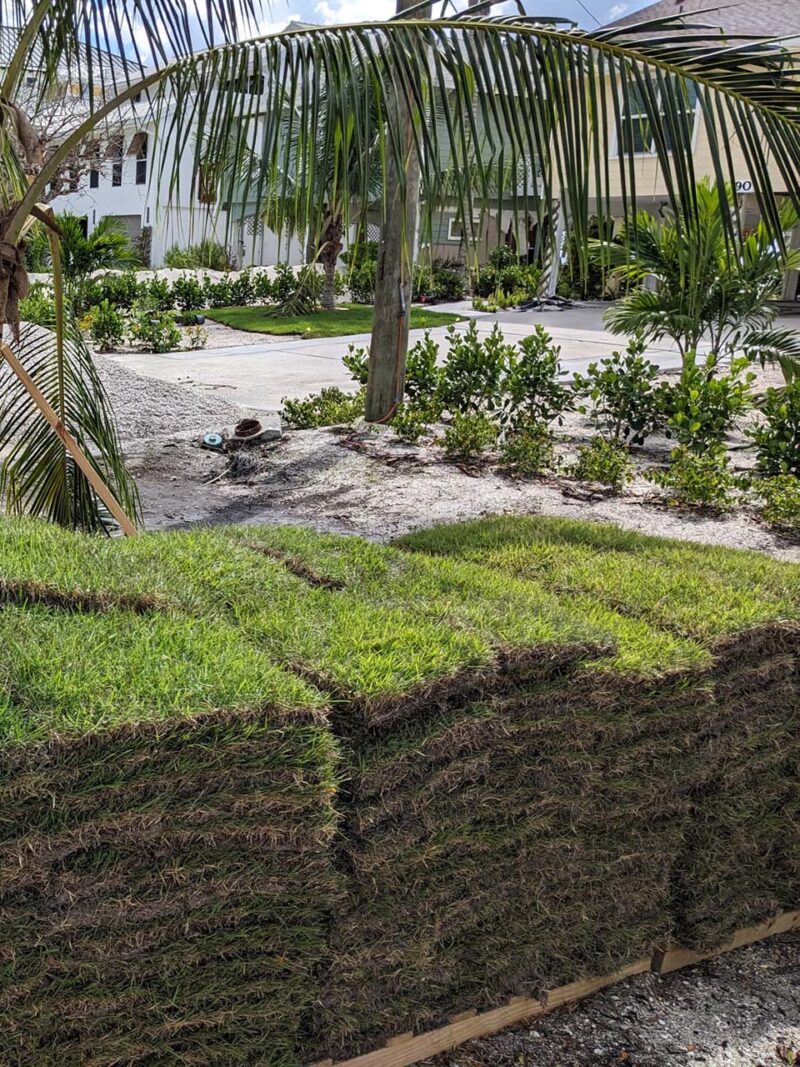
Yes. Sunshine Sod sells perennial peanut in sod rolls only, 30 inches wide by 80 feet long (200 square feet per roll). Delivery and installation are available by arrangement. Contact us to confirm current availability for your project. Ask about the exact plant type, roll quantity and delivery or installation arrangements before ordering.
Is perennial peanut grass a true grass?
No. It is a legume used as ornamental groundcover. “Peanut grass” is a common search term, not its botanical classification.
Can I walk on it or use it for a dog play area?
Occasional light use is different from a daily traffic route. UF/IFAS recommends perennial peanut as a lawn alternative for low-traffic areas and suggests stepping stones where people will walk repeatedly. It should not be presented as a heavy-use dog or play surface.
Will it stay green all winter?
It can stay green in locations without frost. Cold and frost can brown the foliage and cause dormancy. Local conditions and plant type matter; year-round green cover is not guaranteed.
Does perennial peanut need watering?
Yes, especially during establishment. Established rhizomatous types are drought tolerant, but that is not a promise of zero irrigation. Pintoi types have different moisture needs.
Can I plant it from seed?
Do not assume all perennial peanut is seeded alike. Rhizomatous Arachis glabrata is generally established vegetatively; Arachis pintoi can be propagated from seed or stolon cuttings. Confirm the exact type and available planting material first.
Planning a perennial peanut project?
Tell us your city or ZIP code, approximate planting area, sunlight conditions and how the space will be used. Sunshine Sod can confirm current availability and discuss options for your project.
Before ordering, confirm the exact variety, roll quantity, price and delivery or installation arrangements. Ask about site preparation needs and service availability for your location.
Helpful UF/IFAS guidance
Use these Extension resources for more detail on the plant and its care. The species comparison source includes orchard research; orchard-specific fertilizer rates and establishment timelines are not homeowner prescriptions.
- UF/IFAS Gardening Solutions: Perennial Peanut
- UF/IFAS HS1474: Perennial Peanut as a Potential Living Mulch
- UF/IFAS Extension Charlotte County: Another Turf Alternative—Perennial Peanut
Ask about perennial peanut for your property
Share your location, planting area and goals. Contact Sunshine Sod to confirm current availability and options for your project.
Request a Perennial Peanut QuotePhoto credits
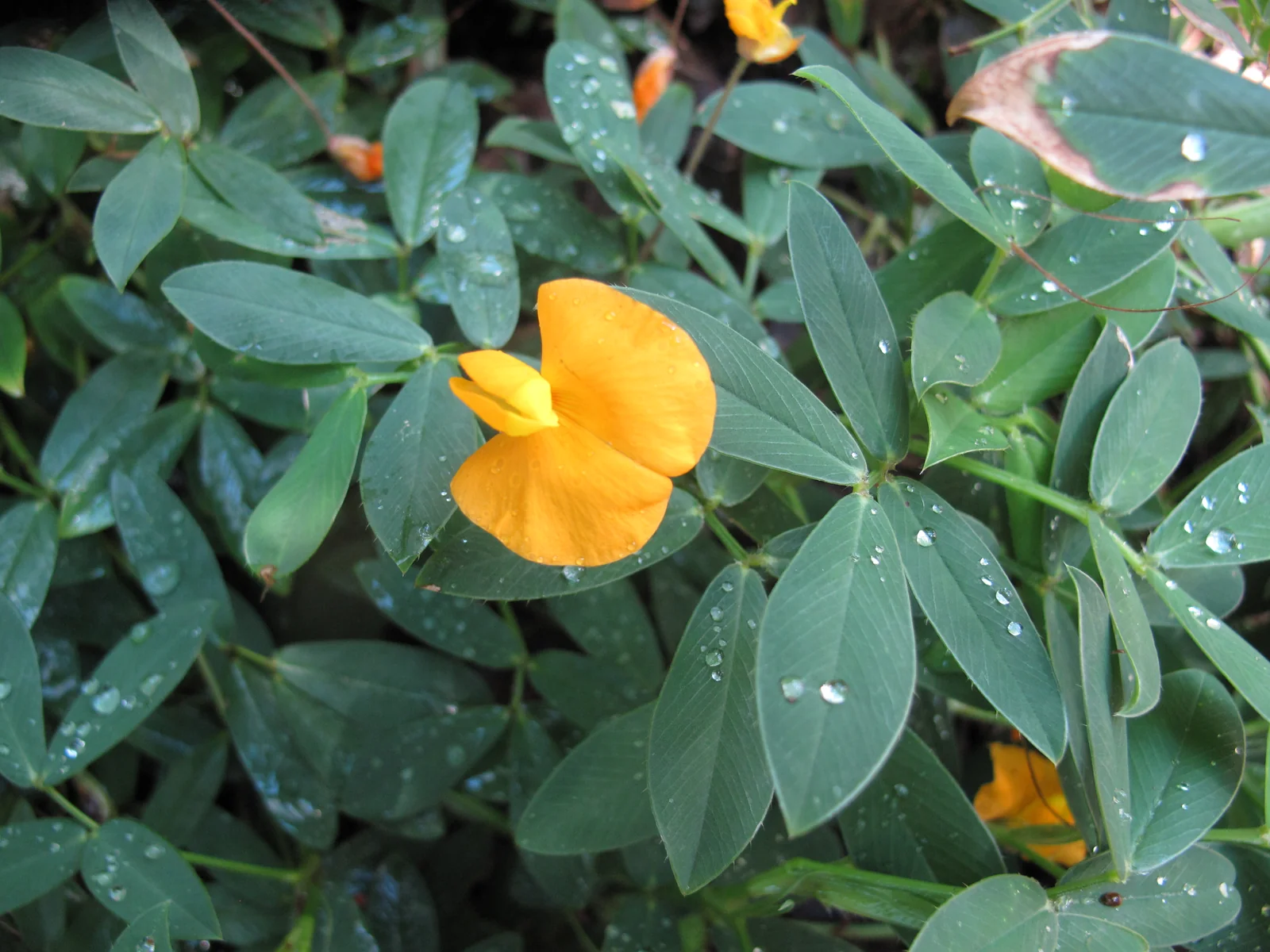
Flower and leaf detail: Arachis glabrata Townsville Queensland 1375.JPG by Btcpg, via Wikimedia Commons, CC BY-SA 3.0. Resized and WebP encoded; responsive display crop. The adapted image is available under the same license.