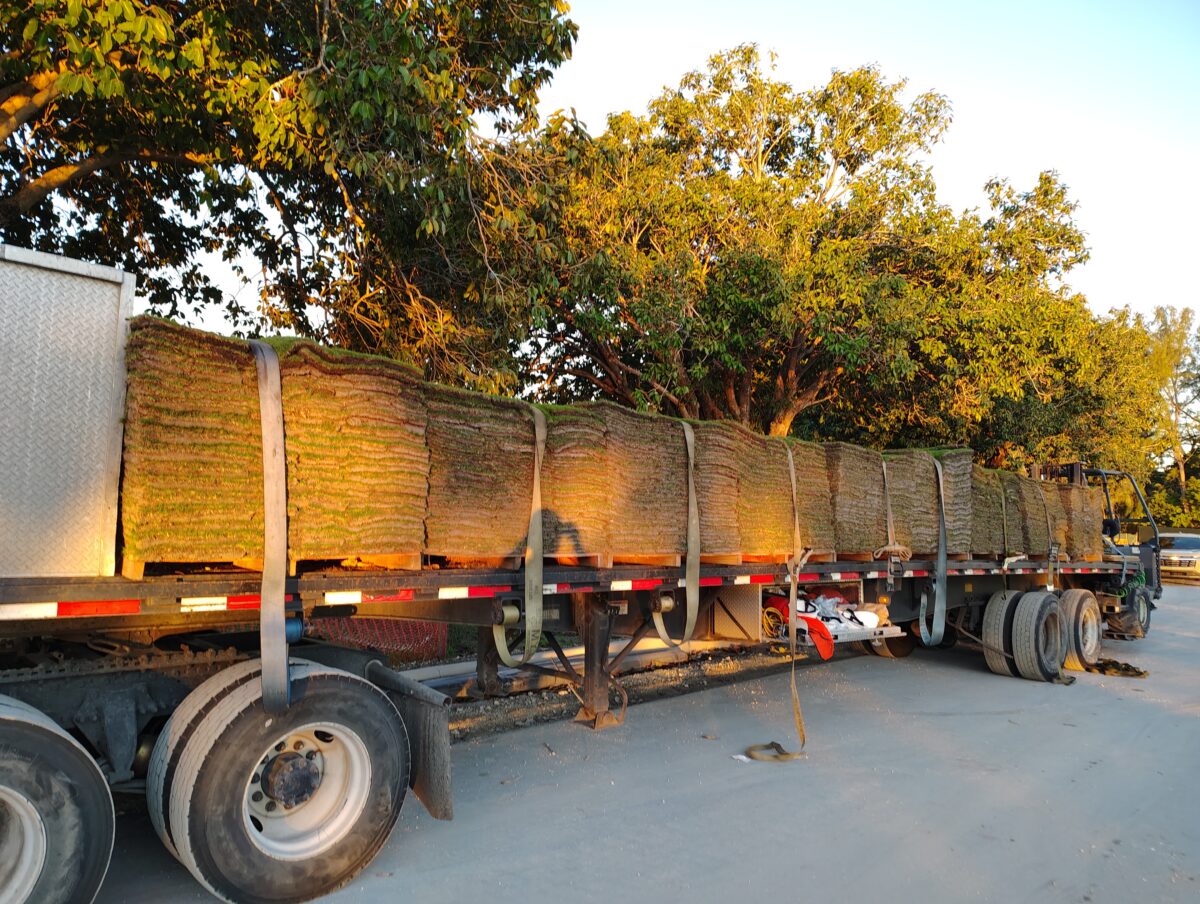
Southwest Florida’s rainy season can be a blessing for a new lawn, but it can also expose every low spot, compacted area, and drainage problem on a property. Afternoon storms help keep fresh sod from drying out, yet too much water at the wrong time can delay installation, make soil prep messy, and leave homeowners with soft, uneven ground if the site is not handled correctly.
For homeowners in areas like Sarasota, Bradenton, Venice, North Port, Port Charlotte, Cape Coral, Fort Myers, and nearby communities, the key is not simply asking, “Can sod be installed during rainy season?” In many cases, it can. The better question is, “Is the yard ready to receive sod when the rain comes?”
Below is a practical guide to planning sod delivery or sod installation during Florida’s wet months without creating avoidable lawn problems.
Why Rainy Season Changes the Sod Installation Plan
Florida turfgrass needs moisture to establish, and newly installed sod has a shallow root system until it begins knitting into the soil. University of Florida IFAS guidance on establishing Florida lawns emphasizes that water management is one of the most important parts of getting new turf established. Fresh sod should not be allowed to dry out, but the soil also should not stay excessively wet.
That balance is harder during rainy season because conditions can change fast. A yard may look dry in the morning, take a heavy storm in the afternoon, and still hold water the next day. If sod is installed over saturated, rutted, or poorly graded soil, the lawn may start uneven from day one.
Rainy season also affects access. Delivery trucks, wheelbarrows, and installation crews need a practical path into the yard. If the side yard is narrow, muddy, or blocked by construction debris, the project may take longer or require a different delivery plan.
Drainage Comes Before Grass
A fresh layer of sod will not fix a drainage problem by itself. In fact, new grass can hide a low spot for a short time while the underlying issue remains. Before installation, walk the property after a normal rain and look for:
- Standing water that remains for hours
- Soft soil near downspouts, pool decks, patios, or driveways
- Ruts from construction vehicles or previous landscaping work
- Low strips along sidewalks or curbs
- Areas where roof runoff dumps directly onto bare dirt
- Soil that feels slick, sealed, or compacted underfoot
Some minor low spots can be corrected during normal sod preparation. Larger drainage issues may need grading, soil adjustment, downspout redirection, or a separate drainage solution before the lawn is installed. This is especially important on new construction lots where builder-grade soil may be compacted, uneven, or full of debris.
Do Not Install Sod on a Muddy, Unstable Base
Moist soil is helpful. Mud is not. Sod needs firm soil contact so the roots can begin growing into the prepared base. If the soil is soupy, footprints sink deeply, or equipment leaves ruts, the installation should usually wait until the site firms up.
Installing over mud can create several problems:
- Uneven grade once the soil settles
- Air pockets under the sod
- Footprints and wheelbarrow tracks that remain visible
- Sod pieces sliding on slopes or edges
- More difficulty mowing once the grass begins to grow
A good installer will look at the site conditions, not just the calendar. Sometimes the right move is to delay by a day or two after a heavy storm so the soil can be properly shaped and compacted before the sod arrives.
Timing Sod Delivery Around Florida Storms
During summer, the best sod plan is often a tight schedule: prep the site, deliver fresh sod, and install it as quickly as practical. Pallets of sod should not sit around longer than necessary in Florida heat and humidity.
Homeowners can help by removing debris, confirming gate access, marking sprinkler heads or shallow utilities, keeping vehicles out of the work area, and warning the installer about tight side yards, slopes, pool cages, or HOA restrictions. If storms are likely, staging matters. The delivery area should be accessible and reasonably firm so a pallet is not dropped where it creates extra handling or damages soft ground.
Irrigation Still Matters When It Rains
One common rainy-season mistake is assuming the weather will handle all watering. Rain helps, but it is not a reliable irrigation plan. Storms can be uneven from one neighborhood to the next, and a quick downpour may wet the leaf blades without supplying consistent moisture across the entire root zone.
New sod generally needs frequent light watering at first, then less frequent but deeper watering as roots establish. UF/IFAS guidance for Florida lawns recommends adjusting watering as the turf roots and grows rather than keeping the same shallow schedule forever.
During rainy season, the practical approach is to monitor the lawn and soil daily. If the sod edges are curling, the grass has a dull blue-gray cast, or footprints remain visible, the lawn may be drying out. If the soil is squishy or water is standing, irrigation should be paused.
A working sprinkler system should be tested before installation, not after the sod is down. Make sure every zone runs, coverage overlaps properly, and heads are not broken or blocked. Hand watering may be needed along edges, corners, and hot spots near driveways or sidewalks.
Fertilizer: More Is Not Better on New Sod
Homeowners often want to “feed” a new lawn immediately, but newly planted turf does not need heavy fertilizer right away. UF/IFAS homeowner best management practices note that nitrogen fertilizer should generally wait until the new turf has had time to establish, often 30 to 60 days after planting, because newly installed sod does not yet have a deep root system.
That matters even more during rainy season. Heavy rain can increase runoff risk, especially near streets, canals, ponds, and storm drains. The smarter plan is to focus first on soil prep, watering, mowing at the right time, and letting roots take hold. If soil concerns are present, a soil test can help guide future fertilizer decisions.
When to Mow After Rainy-Season Sod Installation
Do not mow immediately after installation. The lawn should be allowed to root enough that the sod does not lift when gently pulled at the edges. When it is ready, mow with a sharp blade and avoid mowing while the grass is wet if possible.
Rainy-season growth can be fast, so do not let the lawn get excessively tall before the first mow. Removing too much leaf blade at once stresses new turf. The first few mowings should be careful, clean, and light, with turns kept gentle to avoid shifting sod pieces.
Choosing the Right Grass for Wet-Season Conditions
Southwest Florida lawns vary. A sunny Cape Coral yard, a shaded Sarasota backyard under oaks, a new construction lot in North Port, and a coastal property with salt exposure may not need the same turfgrass. St. Augustine, Bahia, Zoysia, and specialty grasses each have different strengths, maintenance expectations, shade tolerance, and site requirements. Rainy season is a good time to notice where the yard stays wet, where it dries first, and which areas receive full sun or filtered shade.
A Simple Rainy-Season Sod Checklist
Before scheduling sod installation, homeowners should be able to answer these questions:
- Does water drain away from the house, patio, and pool deck?
- Are low spots corrected before sod arrives?
- Is the soil firm enough to prep without ruts?
- Can pallets be delivered close to the work area?
- Is the sprinkler system working and adjusted?
- Are HOA or community rules handled before the project starts?
- Is the old lawn, weed layer, or construction debris fully removed?
- Has the sod type been matched to sun, shade, soil, and use?
If several answers are “not yet,” it is worth fixing those issues before installing the grass.
Need Help Planning Sod Around Southwest Florida Rain?
Rainy season does not have to stop a sod project, but it does make planning more important. Sunshine Sod helps Southwest Florida homeowners and contractors think through sod delivery, site preparation, access, grass selection, and installation timing so the new lawn starts with a better base.
If your yard is holding water, recovering from construction, dealing with HOA pressure, or simply ready for a cleaner lawn, contact Sunshine Sod before ordering pallets. A short conversation about drainage, timing, and site condition can prevent bigger problems after installation.
Sources Used
- University of Florida IFAS Extension: Establishing Your Florida Lawn
- University of Florida IFAS Extension: Homeowner Best Management Practices for the Home Lawn
- University of Florida IFAS Extension turfgrass establishment guidance on irrigation, mowing, and fertilizer timing